

Do You Really Want to Work in Tech? 📱
The Arte of Finding a New Job, Part 2 of Many

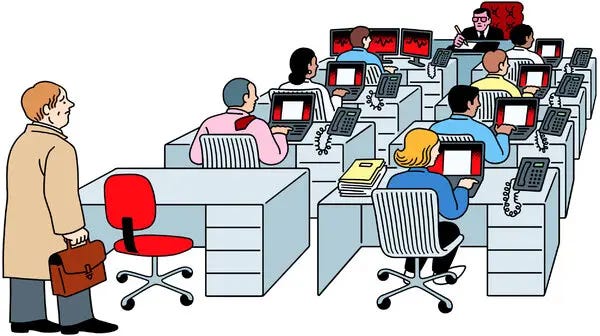
The first conversation I have with a new client usually tells me everything I need to know, and a few things I wish I didn’t.
Not because they burst into tears or whisper, “I hate my job” (though, occasionally, they do). It’s because within twenty minutes, I can usually tell what they believe about work, success, the job market, and themselves.
I learn what pushed them to reach out: burnout, boredom, someone else’s promotion, an undeserved layoff. I hear how they talk about their strengths and which parts of themselves they’ve already labeled as “not good enough,” often before we’ve even scheduled the next call.
We’re not really talking about jobs. We’re talking about belief systems.
In those early sessions, I can often trace the quiet logic that got them here. What was modeled. What was rewarded. Whether they were told to play it safe or swing big. Whether “meaningful work” was a goal or a punchline.
If they’ve been applying to jobs, I can almost always tell what they think they should be doing.
And I cannot tell you how many people are applying to jobs in tech…aggressively, anxiously, with Excel spreadsheets and Notion dashboards…when they don’t actually want to work in tech.
I don’t say this judgmentally. I work in tech. I say this as someone who has lovingly bookmarked job listings I didn’t even want, just because the branding was cool or someone I went to college with works there and now has inexplicably flawless skin.
What I can’t always tell, at least not right away, is what makes them happy. That part takes longer. It’s usually buried.
This post is about that disconnect. The gap between the job you think you should want and the life you actually want to live.
It’s about asking why you’re making the choices you’re making.
My goal isn’t a marginally shinier version of the same misalignment.
It’s breaking the cycle entirely.
And unless your current job is wildly toxic, which makes it harder to untangle what’s real (and if it is, we’ll talk about that), you should probably pause and ask:
Do I actually like what I’m doing?
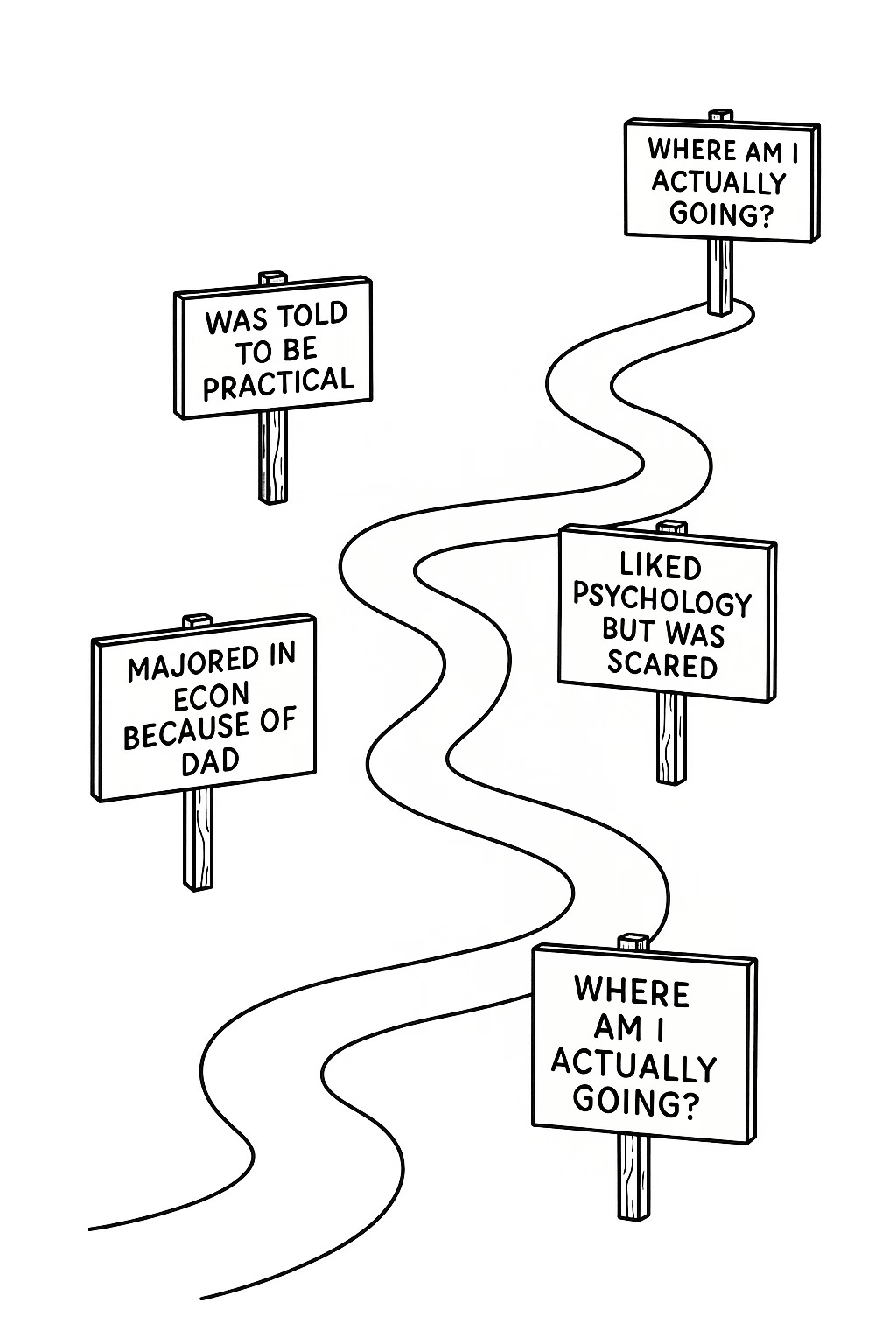
Answering that question might not be so simple, so let’s unpack that together. These are things you’ll want to consider before applying to new roles.
How Did You Get Here?
If you don’t know how you got here, to this place you don’t want to be, you’re likely to walk a similar path again.
Maybe both of your parents were lawyers. Maybe you grew up around courtroom dramas and career day lectures. Maybe you were gently, repeatedly nudged into law school, and now you’re deep in it, unsure if it’s yours or just what you were steeped in.
But loving something because it’s familiar doesn’t make it your future. It just means it’s what you’ve absorbed. That’s not the same as alignment.
Or maybe someone helped you land your first job—kindly, informally, in whatever industry happened to say yes. And since then, you’ve just kept moving forward. Not because you love it, but because you’re competent. And being good at something is often enough to keep you there.
It’s time to start making career choices with intention. If you don’t, someone else’s intentions will fill the space, and you’ll end up on a path built out of expectation and convenience, not desire.
Are You Confusing Education with Enjoyment?
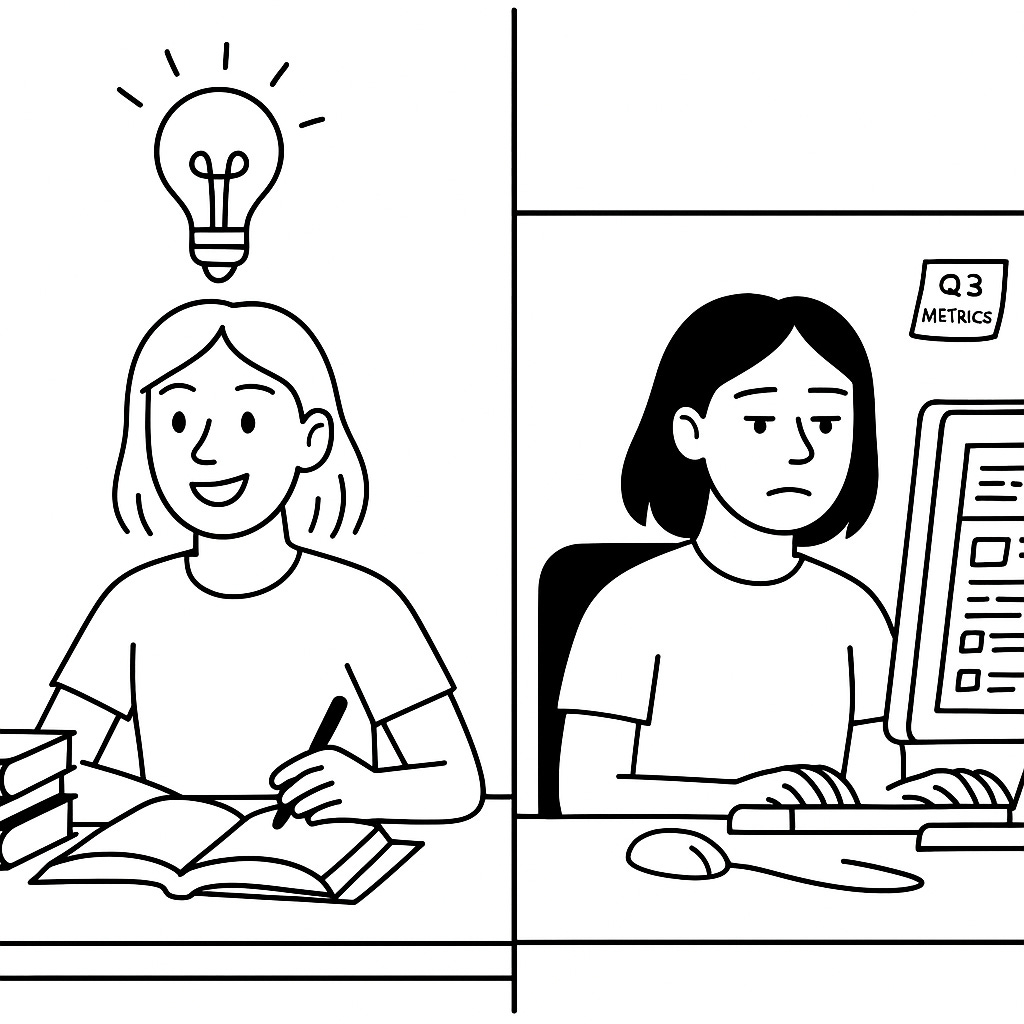
School subtly fails us here: it teaches us that liking a subject means we’ll like the work.
But work isn’t always like school. It has goals that aren’t always yours. It’s not always about curiosity, it’s often about repetition and a lot of meetings.
Maybe you loved learning to code. Great. But do you enjoy sitting at a screen for eight hours, fixing things you didn’t build, solving problems you didn’t choose, and following a product roadmap you didn’t design?
Maybe you were fascinated by anatomy. Amazing. But do you want to see patients in 15-minute intervals while arguing with insurance companies?
It’s not enough to love learning something. You have to like doing versions of it, often imperfectly, repeatedly, under pressure, sometimes in ways and for people you don’t like.
Ask yourself: what parts of your education lit you up? And what parts of your job give you that feeling now?
Are You in Love with the Company, or the Job?
This one’s sneaky.
You might love your Oura ring. That doesn’t mean you want to handle Customer Success complaints from insomniacs who lost their charger.
You might love therapy and be drawn to a mental health startup. But if you’re doing the same ops role, the same spreadsheets, the same metrics, just with better branding, you might still be unhappy in two years.
Don’t confuse admiration for the product with a desire to be part of the machine behind it.
What Does a Perfect Day Look Like?
What are you doing on them, both at work and in life? What time do you wake up? What kind of conversations are you having? What tools are open on your desktop? Do you have time for a real lunch? Are you alone or surrounded? Energized or useful?
The specifics matter.
They’re the difference between wanting flexibility and just wanting out.
Now Think About Who You Admire and Why.
Whose career path catches your attention? Whose updates make you pause? Whose choices feel bold, or enviable?
Be honest about it. Is it their power? Their freedom? The kind of people they work with? The subject matter? The perceived stability?
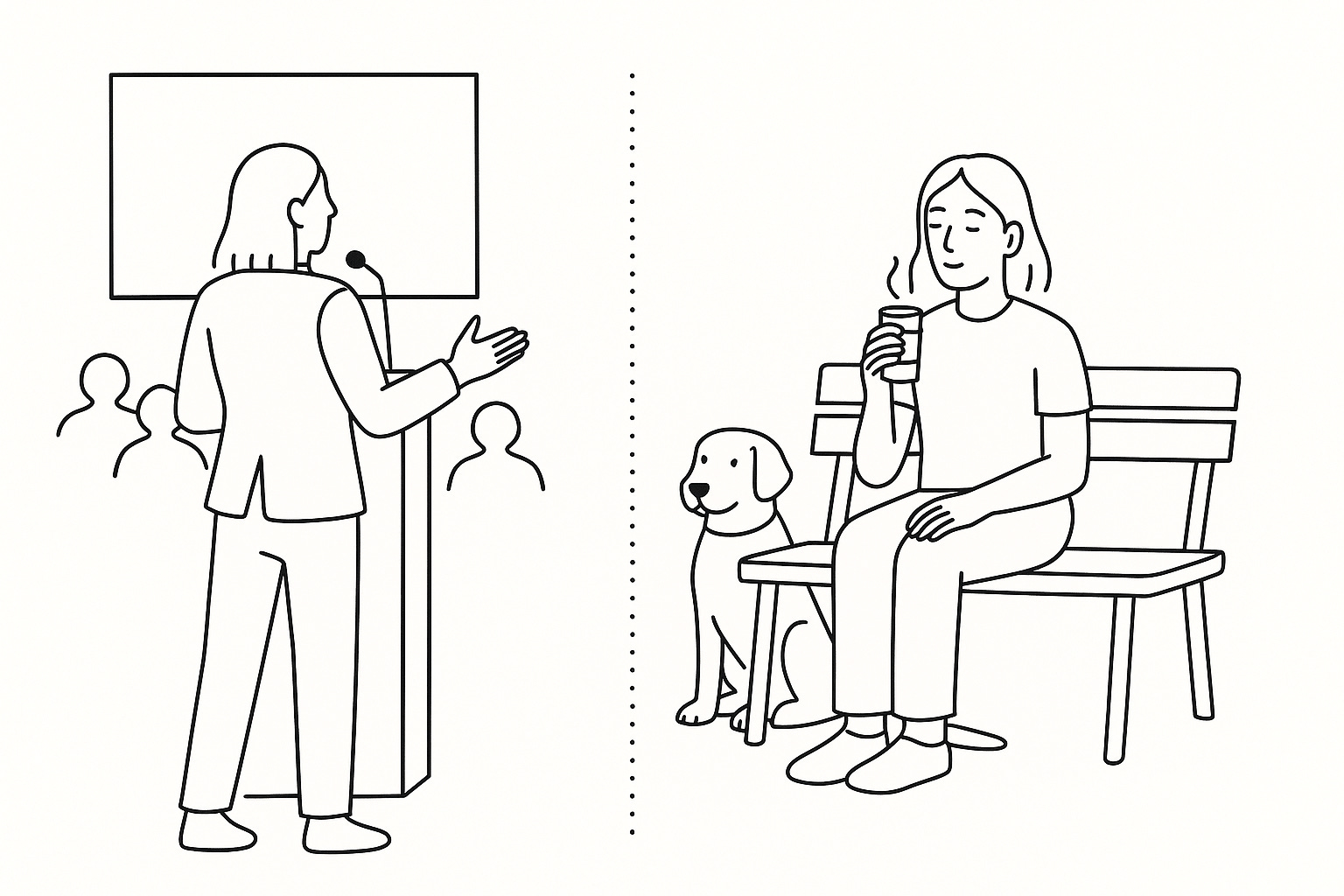
Because you might admire a founder, but if your best day involves walking your dog at 10am and eating soup in silence, you probably don’t want to lead a company. You just like the image. Or the autonomy. Or the fact that they seem in charge of their time.
That’s worth noticing.
Because if you can name what you’re drawn to, you can start to find other ways to build it without forcing yourself into a life you don’t actually want.
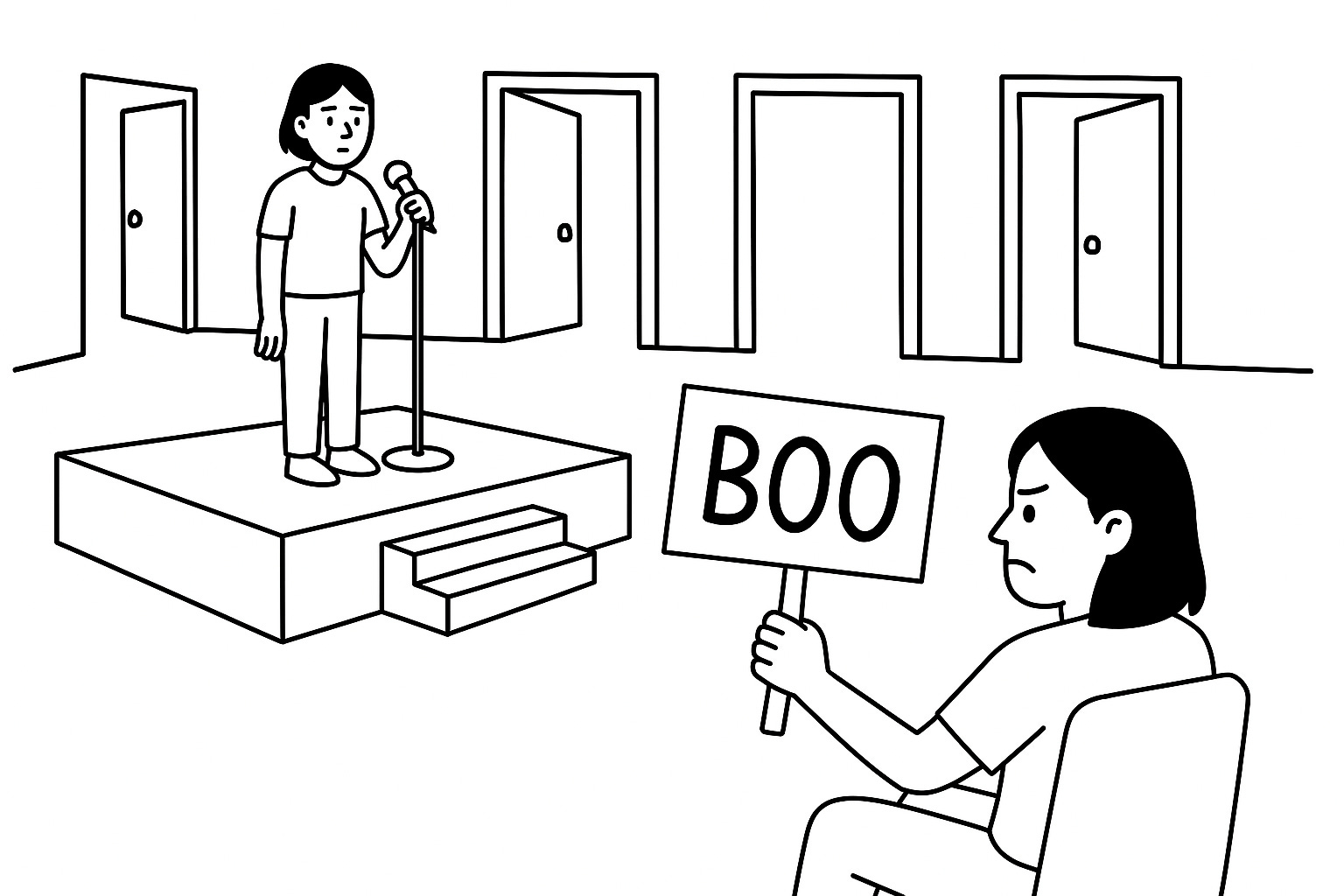
Are You Booing Yourself Offstage?
My brother worked at Boeing for years. Eventually, he realized he hated it and became obsessed with AI. This was before it was trendy. He wanted to pivot, but he kept getting stuck on the same thing: “I don’t have experience.”
My response: So what?
Yes, you can’t go from marketer to doctor in six months. But unless you’re on your deathbed, and as long as you’re flexible and realistic, I truly believe you can pivot into almost anything.
I’ve seen it happen over and over again. The problem isn’t your resume. The problem is the voice in your head saying, “You can’t.”
And often, that voice isn’t even yours. It’s fear. Or someone else’s projection. Or society’s weird obsession with linear careers that don’t actually exist anymore.
If someone else is telling you it’s not possible, it’s probably because they’re too scared to try. If you’re telling yourself it’s not possible, it’s time to ask: what would happen if I stopped believing that?
Because I promise you, I’ve seen people with more baggage and less experience make braver moves than the one you’re probably avoiding.
Finally, Are You Fixated on Things Outside Your Control?
Let’s say you’ve cleared some space. You’ve given yourself permission to care about your future more than your performance review. You’re already ahead of most people.
Now comes the next obstacle: the story you’re telling yourself about why it’s all so much harder for you.
And let’s be clear: you’re not wrong. It might actually be harder for you.
If you didn’t grow up with money. If you don’t have an Ivy League degree. If you’re a woman, or a person of color, or first-gen, or neurodivergent, or a parent, or caring for aging parents, or just didn’t start optimizing your LinkedIn in college while interning at your uncle’s VC firm, then yes, it’s harder.
But staying stuck in the mental loop of “It’s harder for me, so I probably won’t succeed” doesn’t protect you. It just keeps you exactly where you are.
I say this as someone who’s worked for, with and helped hundreds of women who do not have every advantage. They didn’t always have connections or prestigious degrees. They had ambition, anxiety, and sometimes a big scary career change they didn’t know how to explain at parties.
And they figured it out.
I’ve seen office managers become engineers. Engineers become marketers. One of my best friends went from 9-to-5 to esthetician-slash-sound-therapy life on the road, living in a van with her boyfriend. I’m so proud of her I’ve started telling strangers about her like she’s a cousin who made it. My own acupuncturist, who’s deeply credentialed and absurdly good at what she does, worked on Wall Street until she was 40. As a single mom.

The system isn’t fair. But that doesn’t mean you have to stay on pause while you wait for it to become fair. The people I’ve seen rise didn’t do it because someone gave them permission. They did it because they stopped waiting to be discovered and started discovering what they actually wanted.
So if you’re circling the same questions, unsure where to go next, good. That means you’re paying attention. You’re not coasting. You’re starting to listen, even if the answers feel slippery.
And maybe you don’t know what you want yet. That’s okay.
You don’t need to have it all figured out. You just need to be curious enough to stop sleepwalking and brave enough to keep asking better questions.
More to come next time!
📝 Your Homework for This Week 📝
If you haven’t read my previous piece, take a look:
It's Not the Market, It's You (and Also the Market) 📉
Whip out that journal or wherever you’re taking notes these days and answer the below questions:
What did I learn about work growing up?
Who modeled “success” for me, and how has that shaped what I believe is possible or acceptable?What parts of my job do I actually like—if any?
What tasks, moments, or dynamics give me energy (or at least don’t drain me)?Am I chasing a role, or just a brand?
Would I want this job if it didn’t come with prestige, perks, or a cool logo?What does a good day look like for me?
Be specific. What time am I waking up, working on, surrounded by?What story am I telling myself about why I can’t change?
And whose voice is that, really?
Digital Tip Jar 💸
I’ll never make you pay to read my thoughts on career stuff. This knowledge should be available to everyone. But your girl still has bills, and since Substack doesn’t offer a tip jar yet, feel free to send whatever you think it's worth HERE.
If you think it’s worthless and send me a request for money, I’ll immediately send one back, just for making me deal with that energy.
Help Me Help the Algorithm. 🙏
If this gave you something useful, send it to a friend. Or an ex-colleague. Or your cousin who keeps launching half-hearted startups.
And if you liked it, subscribing is the modern version of saying, “Thanks, this helped.”
Phew! This REALLY hits home!
I loved this! I think reflecting on an ideal day in the life is an important one. I often find myself attracted by shiny job opportunities in tech, but speaking to someone who works there about an actual day in their life is enough to put me off 😅