

The Most Damaging Question Americans Ask Each Other Every Day
What a corporate NDA taught me about identity

For the new crowd: welcome. This one's from the vault.
After being acquired by a major tech company after years of living the start-up life, there was a catch:
I couldn’t tell anyone.
I couldn’t tell anyone for almost a year — not until they hit a major public milestone.
And while this legally binding restriction may sound absurd, it’s not uncommon for organizations to set such conditions to avoid prematurely unveiling their strategic direction to competition.
After my initial surprise, even I had to admit it made sense. So, to acquiesce, I began dismissing or intentionally diverting conversations around my employment, something I so ardently (annoyingly) discussed previously. And, much to my surprise, once I adjusted, I didn’t mind the silence.
JK, Who am I kidding? I reveled in the secrecy.
I was Lady Whistledown with a whale-bone corset full of Bridgerton gossip securely anchored to my waist.

I was an undercover agent immersing myself in a mysterious world of… corporate life.
It felt weirdly powerful, holding onto a secret that so few knew, even if the knowledge really didn’t impact anyone other than myself.
But there was one major problem, a huge societal communication flaw I’d never noticed. In fact, it was only after I was legally bound to STFU that I began to recognize and take issue with the classic American question:
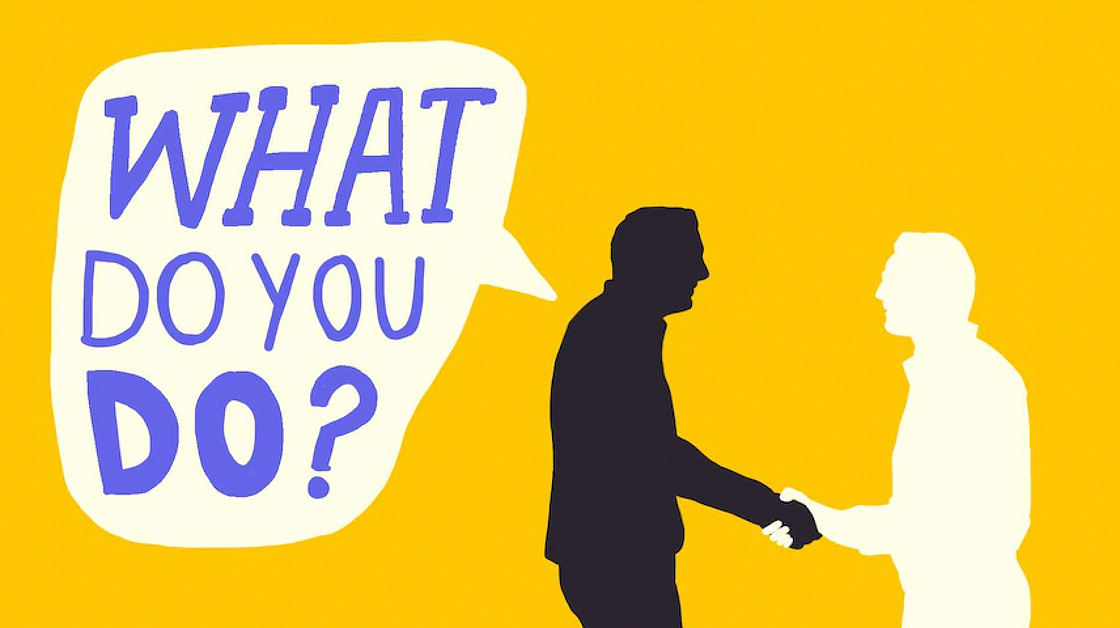
What. Do. You. DO?
When Personal Success Becomes Your Title
From an early age, we are assigned societal labels based on our achievements and accolades, especially those that receive public recognition and praise. And this external validation shapes our self-worth and influences how others perceive us.
While it starts for some as early as toddlers, when they compete for coveted spots in prestigious private schools, the pressure begins to mount for many of us during middle and high school. It is during this crucial stage that we feel compelled to craft impressive resumes boasting exceptional GPAs and an extensive list of extracurricular activities, all in the pursuit of becoming highly sought-after candidates for our desired colleges.

Yet, when we enter college, we often abandon the passions we once cherished, activities that played a crucial role in gaining us admission to these esteemed institutions— sports, music, and art —since, regrettably, your ability to sink three-pointers or build slap-worthy playlists doesn’t hold significant value for future employers. Instead, we focus on newly appreciated achievements with a higher fiscal ROI, such as locking in notable internships.
And then it happens.
At some point in our late teens or early twenties, like a uniform wave, many of us start to confuse who we are with what we do. At first glance, this seems understandable, considering our sense of self is often still vague and evolving. Thus, instead of doing the hard work of clarifying who we are in more authentic ways, we use these easy labels as self-identifiers.
Accountant. Engineer. Entrepreneur.
But over the years, we double down. We forget that we may have pursued specific paths to earn a decent income or prove our worth to our families (hi, all you doctors, lawyers, etc.) and convince ourselves it was a conscious choice. We develop a phenomenon akin to Stockholm syndrome. Our entire identity becomes where we graduated, our job title, and the company we work for.
Worse, we judge others on the same and compare accolades.
When we date people with better jobs than us, or better degrees, we might wonder if we aren’t worthy and willfully ignore 🚩 huge red flags 🚩 — like their absolute trash personalities, lack of meaningful friendships, and compulsive need to name-drop Hawr-vard into every conversation.

Sure, they went to an Ivy (their parents were legacies), and they might have a great title (their Uncle is the CEO of Very Big Company), but does that matter if they’re kind of an asshole to the waiter?
Or worse, if they’re kind of an asshole to you?
Do we really believe that that is what success looks like?
Who Are You, Really?
I want to be clear: I like to work. Right now, I like my current role. And maybe you do, too. I even like a few Harvard graduates (like five, Elle Woods included).

For the first time in my life, I am not identifying who I am with my title. And neither should you.
So this is an intervention: you are not your job. I repeat:
You are NOT your job.
You are not Jane Kelly (TikTok followers: 1.2M), Director at Google, 30 under 30 alum, girlfriend of Chief Operating Officer at a well-funded AI company DiSrUptInG the whatever industry.
On the societal flip side: You are not Jane Kelly, middle management at a non-notable company achieving an average but livable wage.
You’re so much more than that.
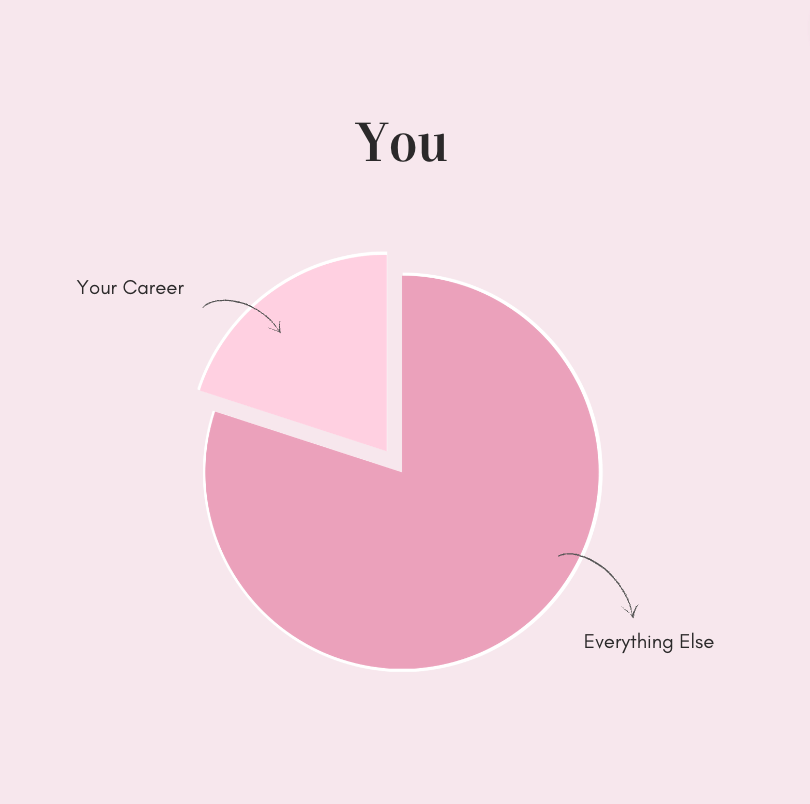
The public may not be privy to your finest qualities, and that’s perfectly alright — because the shallow bar society measures you against does not define you.
Perhaps, you’re a really awesome friend to have. You like being outside and especially love large bodies of water. You enjoy cooking but hate avocados. You may make less money than other people you know, but you have more free time, which you spend doing things you love. Or maybe you’re a really freaking kind person. Or- and we need so much more of this — you’re a great parent with kids who feel loved, safe, and accepted.
That is something you should be wildly proud of.
That is way more impactful on the world than getting an incremental promotion.
So the next time someone asks you, “What do you do?” smile back confidently and respond:
So many things that bring me joy. What about you?

Digital Tip Jar 💸
A paid subscription is a real commitment—I get it! Still, this writing takes place in the margins of a full-time job and parenting, which is to say: during late nights with coffee. If you want to support my work without committing perpetually, buy me a coffee via my virtual tip jar ☕ — any contribution is appreciated!


