

Where Are You Actually Trying to Go?
The Arte of Finding a New Job, Part 4 of Many


In my last post, we talked about applying to jobs in a less throw shit at the wall and see what sticks manner and a more I actually want to get employed manner. I gave you a system to adhere to (God, I know, Merry early Christmas, slap a red suit on me and call me Santa) and explained how I have clients use this system.
But it’s been awhile since that post, and in the rare five minutes of peace my toddler gave me over the holiday break, I realized that while I’ve given you the tactics, I haven’t shown you how to zoom out and see how this whole job thing fits into your larger life plan.
So here we are.
Zooming out.
Or, in the words of my son, spoken as he reverses on his tiny balance bike moments before hitting something he definitely should not:
“Beep. Beep. Beep. BACK UP.” - 👶🏻
Because today I’m going to walk you through a new exercise: 5x5 Goal Mapping.
If you’re new here, this is part 4 in a series:
It’s Not the Market, It’s You (and Also the Market) – on what to do when everything feels broken
Do You Really Want to Work in Tech? – on choosing a path that’s actually yours
Stop Applying to Jobs Like a Desperate College Grad – the structure that makes a job search manageable
Now back to goals.
“Wait…why are we detouring? I really need a job.” - You
YES, I know, I get that. We’ll get to that. I promise. But not today. NOPE.
Because more than a great new job, you need a balanced, fulfilling life. And without a clear vision of the life you are trying to build, even the most impressive job can take you somewhere you never meant to go. Like working for Comcast*.

So instead of treating a new job like the sun your whole universe must orbit, we’re going to fold those career dreams into the bigger quilt of your future. And we’re going to do that now. Because if we don’t do that from the onset, equally important parts of you will end up squeezed into the ragged borders of your life, waving their sad little hands frantically, wondering why they aren’t getting any attention. Or worse, you will end up like Elon Musk, basking in the glow of an insanely impressive career but living a personal life that feels so hollow and lonely that you’re tweeting cringeworthy laments at 2 AM**.
But not you, you are not Elon Musk. You are a whole person. And that whole person deserves structure, attention, and actual time blocked off in the calendar.

So without further adieu, get out a sheet of paper (it’s always more fun when done by hand), and write down these five categories:
Work
Finance
Relationships
Health & Soul
Fun
Label those YEAR 1.
Now rewrite this five categories.
Label those YEAR 5**. This is where the 2nd “5” comes from. Five categories, looking five years down the line.
Now let’s proceed.
Step 1: Understand the Categories & Write Your High Level Goals for Year One
A goal, in this context, is the end result. It is what you want to achieve.
For each of the categories above, write only two or three goals. A couple of clear goals in each section keeps things realistic and keeps you from over-busying yourself.
The rest is noise.
Now let’s look at how this might look in each category (with some fake examples).
Work
This covers your professional development: skills, promotions, career changes, entrepreneurship.
Example Goals:
Land a job in product at a women’s health startup
Build a portfolio site and start freelance consulting
Get promoted to Level 3 Manager
Finance
This is about building stability, flexibility, and peace of mind. Your financial goals should support the life you’re designing. Make them aggressive, but realistic. I have always found that if I set aggressive financial goals, I exceed them.
Example Goals:
Save $10k
Pay off student loans
Start investing with a Roth IRA

Relationships
Friends, family, dating, mentorship, and community. These goals are about depth and consistency, not quantity. What makes you feel supported and known?
Example Goals:
Strengthen my relationship with my partner
Make new friends
Spend more in-person time with my best friends
Health & Soul
This is everything that keeps you upright: physical, emotional and spiritual. Because the older I get the more I realize if you aren’t healthy in body and mind, nothing else matters.
Example Goals:
Run a 10K in the fall
Stop using social media (literally everyone should do this on mobile, at a minimum)
Build a more peaceful home life
Fun
Yes, fun is a category. Not a luxury. Not a reward. This is joy, adventure, creativity, play. It’s what recharges you and makes you feel alive.
Example Goals:
Visit Japan for two weeks
Learn how to rollerblade
Try three new hobbies
Step 2: Write your Key Results
If you work in an office or startup environment, you might be familiar with Key Results. They’re my favorite part of fiscal planning because they bring tangible clarity to lofty goals.
Likewise, in this exercise, Key Results are the promises you make to your future self. They are the tiny lanterns you set along the path so you can see where you are going on the days when life feels like a cluttered junk drawer. A good Key Result is specific and measurable. You can point to it and say, yes, I did that, or no, shit, I did not do that, without needing to negotiate with yourself the way you do about whether tortilla chips count as dinner.

For each high-level goal, list at least three Key Results. They should be the concrete steps that lead directly to your goal, and if completing them doesn’t get you there, it’s time to revise them.
High-Level Goal: Save $10k
Key Result 1: Transfer a set amount into savings every month so the total reaches $10,000 dollars by year end.
Key Result 2: Reduce or eliminate two recurring expenses within the next sixty days, such as unused subscriptions, dining out, or impulse purchases.
Key Result 3: Earn an additional 200 to 300 dollars each month through small side income, selling unused items, or occasional freelance work.
Key Result 4: Review your spending at the end of each month to confirm you are on track for the $10,000 dollar goal and adjust if needed.
High-Level Goal: Build a more peaceful home life
Key Result 1: Create a nightly reset routine by tidying the living room for ten minutes before bed so the morning starts calmer.
Key Result 2: Establish one weekly household rhythm, such as a Sunday fridge clean out or a Wednesday laundry catch up, to keep chaos from stacking up.
Key Result 3: Declutter one space each month, rotating through the pantry, bathroom cabinet, hallway closet, and kids’ toys so the house slowly becomes lighter.
Key Result 4: Set up one “peace corner” in the home, such as a reading chair or a quiet nook, and keep it consistently clear and inviting.
Step 3: Repeat for Year 5
Now do the whole thing again, but this time for Year Five, which is far enough away that you can aim higher without breaking into hives.
If you want to be married in five years, for example, you cannot spend the next twelve months hiding under a blanket watching crime documentaries and pretending the dating apps do not exist. You have to work backward and figure out what would actually need to make that happen.
Working backward simply means starting with the future you want and tracing the steps required to reach it. Because Year Five goals demand more forward thinking, I recommend no more than two goals per category here.
And be more ambitious than you think you have any right to be.
A ridiculous amount can happen in five years. In a span of just four years, I left one company to lead marketing at a start-up, celebrated our sale to a massive tech giant, got married, had a child, and bought a house (which we’ve renovated significantly), among several other big life things. Yet the only items on my list were double my salary and get married which should tell you I wasn’t thinking big enough.
Now, let’s walk through that marriage example.
If you want to be married in five years, start by remembering that planning a wedding alone can take a full year. Working backward from there, you would likely want to be in a serious relationship by Year Three, which means you probably need to be dating someone with aligned intentions by Year Two. And to even get to that point, you need to handle the basics this year: update your dating profile, go on actual dates, and stop letting crime documentaries consume your entire personality (unless your future partner loves that too). And all of this assumes the relationship you enter actually works out, so build in buffers.
When you work backward like this, the big, faraway dream becomes a series of smaller, doable steps, and those steps naturally evolve into your Year One goals. Yes, I know this is annoying and yes, sometimes life moves faster and your friend meets someone on a girls’ trip to Nashville, has a whirlwind romance, and is married and pregnant in twelve months.
But that is the exception, not the rule. Plan like you are the rule and you are far more likely to end up the exception. Sure, these timelines will shift. But having some plan is better than having no plan, as long as you stay flexible along the way.
So, with that in mind, your Goal and Key Results may look like this:
High-Level Goal: Be Married
Key Result 1: Update your dating profiles, photos, and prompts within the next thirty days so they reflect your real intentions. Be direct about what you want, or at a minimum, honest when asked. On my first date with my now husband, I told him I planned to have my first child at 35. To be clear, I was sharing my goals, not assigning them to him. Some people will not like what you want, and that simply means they are not your person. Perfect. Move on. Someone else will****.
Key Result 2: Attend at least 12 social events per year where meeting new people is possible, not theoretical (one per month). Talk to at least three new people at each event. Aim to exchange information with at least one.
Key Result 3: Start dating intentionally by the end of Year One by going on at least two dates each month with people who share long-term relationship goals.
Key Result 4: Have a clear relationship values checklist and revisit it every quarter while dating. Know your hard lines, and keep them few. These should be the core things you are unwilling to compromise on, like religious alignment or wanting children, not “loves to eat out” unless you’re a professional Food Critic and this is your literal paid job (not an annoying hobby).
Key Result 5: Set aside a wedding savings fund and contribute to it quarterly starting in Year Two.
Key Result 6: Be in a stable, aligned, committed relationship by the end of Year Three.
Key Result 7: Be engaged and begin wedding planning during Year Four, including venue research, budgeting, and any necessary family logistics.
Now do this for all of your goals and don’t be surprised if, after sketching out your Year Five goals, you suddenly realize all your Year One goals need a little surgery.
Step 4: Make Sure Your Goals Match Your Actual Values
Before you move on, take a hard look at your goals and check whether they line up with what actually matters to you, not what you inherited, absorbed, or quietly drifted into. In my recent piece Do You Really Want to Work in Tech?, I talked a lot about how easy it is to mistake familiarity for alignment, or to follow a path simply because you happened to be competent at the first job someone handed you.
The same thing happens with goals. People write down “earn more,” “move to a big city,” “be a manager,” “join a hot company,” or “start something of my own,” without ever asking whether those things reflect their values or just the cultural noise they have been swimming in. Admiring a career path is not the same as wanting the daily life that comes with it. Loving the idea of children is not the same as being happy waking up at 6AM every day (and often many times in the middle of the night) and dealing with the costs and complications of having them.
Your goals need to hold up against the realities of your actual preferences.
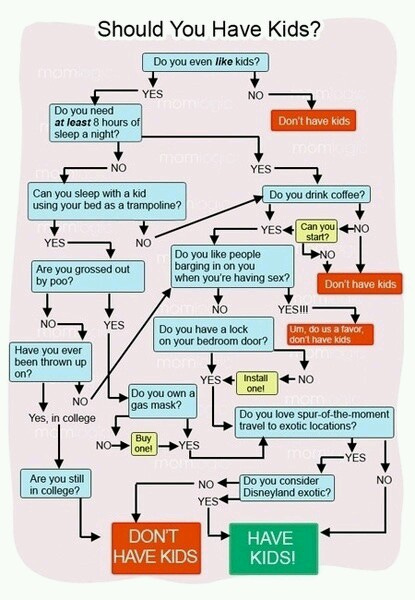
That means the way you like to live. The rhythms that make you feel human. The specifics of what a good day looks like for you. The things you want more of and the things you are absolutely done with. All those little details are the breadcrumbs that point toward your real values. And those values are the only thing that can keep your plan grounded in your life rather than someone else’s idea of a life.
Step 5: Schedule It or Scrap It
Now you have to put your Year One goals and Key Results into your actual calendar.
Start by looking at each Key Result and asking when it needs to happen. Not in a dreamy way, but in a what-day-will-I-literally-do-this way. If you want to go to four community events this quarter, pick the months you will do them. If you want to save a certain amount every month, put the transfer dates right on the calendar so the money does not evaporate into takeout and panic-buying toddler snacks. Where needed and available, add buffers. Not in goals like the one above, but in goals you have less control over, like, “be in a serious relationship”. Maybe you aim for end of Year One, when you really know you need that by Year Two.
Break things into small steps. Put those steps on actual days. Some things will be weekly, some monthly, some quarterly. Spread them out so you do not accidentally schedule your entire new life for the first Tuesday of April.

And be realistic. If you hate mornings, do not schedule your “transformative new habit” for 6 a.m. on a Monday. That is a setup for failure and also for hating yourself. Put things where they have an actual fighting chance.
The point is simple. A plan that stays trapped in your mind is just wishful thinking. A plan that is on your calendar becomes a life you are actively building.
Before We Close
So you have mapped Year One, stretched yourself into Year Five, and dragged your plans all the way into a real calendar. There is just one more thing I want to leave you with, an incredible question that came up following a recent guest lecture I gave that’s been rattling around in my mind ever since.
Of course, I’m paraphrasing, but it went something like this:
“How do I turn down opportunities that are not aligned with my goals?”
I spit out the answer before I even thought about it: quickly.
Turn them down quickly.
The guy who doesn’t want a relationship.
The job that requires you relocating to a city you don’t want to live in.
The snack that takes you farther from your health goals instead of closer.
And I should have added — and without regret.
There are so many tempting lives you could live. So many roles, cities, relationships, and shiny possibilities that would look fantastic on paper and still pull you away from the life you actually want. Some will offer prestige. Some will offer stability. Some will offer a brief, sparkling hit of validation. But if they do not move you closer to the life you are building, they are distractions, nothing more.

Your job is not to gather impressive options like seashells. Your job is to build a life that fits you.
And the clearer you are about your goals, the easier it becomes to walk away from the things that are not meant for you.
Not because they are bad.
But because they are simply not yours.
One More Ask 🙏
If mapping your Year One and Year Five felt grounding, relieving, or slightly terrifying in a good way, send this to another human who could use the same clarity. Someone is currently Googling “career change at 29???” and they need this more than they know.
And please like and subscribe because the algorithm demands its sacrifice.
*I hate you, Comcast
**If you think that man is happy you’re insane
***Sometimes I have people include a third year so they can see their path more clearly. But usually, if you map out year one well, so much in your life shifts in that first year that it throws the whole five-year plan off anyway.
****If you keep finding that no one shares your goals, take a look at the goals you’re setting or the people you’re choosing. Sometimes it is actually a commitment issue on your end that leads you to keep picking the wrong partners. Highly recommend the book Getting to Commitment. But I am absolutely no relationship expert so seek a professional (ideally a professional who has personal experience who can walk you through the realities of relationships and marriages and not BS Disney ideals).